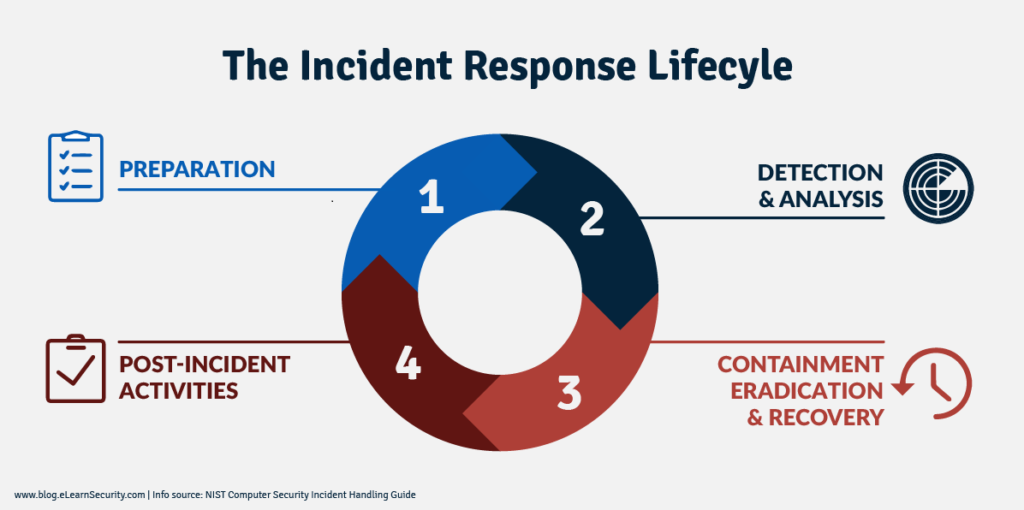
Containment refers to the limiting and preventing of further damage to a computer system or network. Containment is a part of incident response, right before the eradication of the threat. Examples of containing a cyber security incident include: Blocking and logging of unauthorized access, blocking malware sources, closing specific ports and servers, changing administrator passwords, relocating website home pages, and isolating systems or networks.
Your business needs to take proactive measures today to first reduce its chances of being hit by ransomware, phishing, or other cybersecurity attacks. Secondly, validate backups and disaster recovery plans are current and functioning in case you end up hit with ransomware. CyberHoot recommends the following best practices to avoid, prepare for, and prevent damage from these attacks:
Start building your robust, defense-in-depth cybersecurity plan at CyberHoot.
Related Terms: Eradication, Recovery, Revision
Source: Bluegrass Cyber Security
Discover and share the latest cybersecurity trends, tips and best practices – alongside new threats to watch out for.

AI tools moved into our everyday work-life incredibly fast! Someone on your team writes an email with ChatGPT....
Read more
You have seen them before. A small black camera on a pole near an intersection, a solar panel on top, quietly...
Read more
Tax season keeps accountants busy, and it keeps scammers busy too. Early this summer, a CPA firm became the...
Read moreGet sharper eyes on human risks, with the positive approach that beats traditional phish testing.